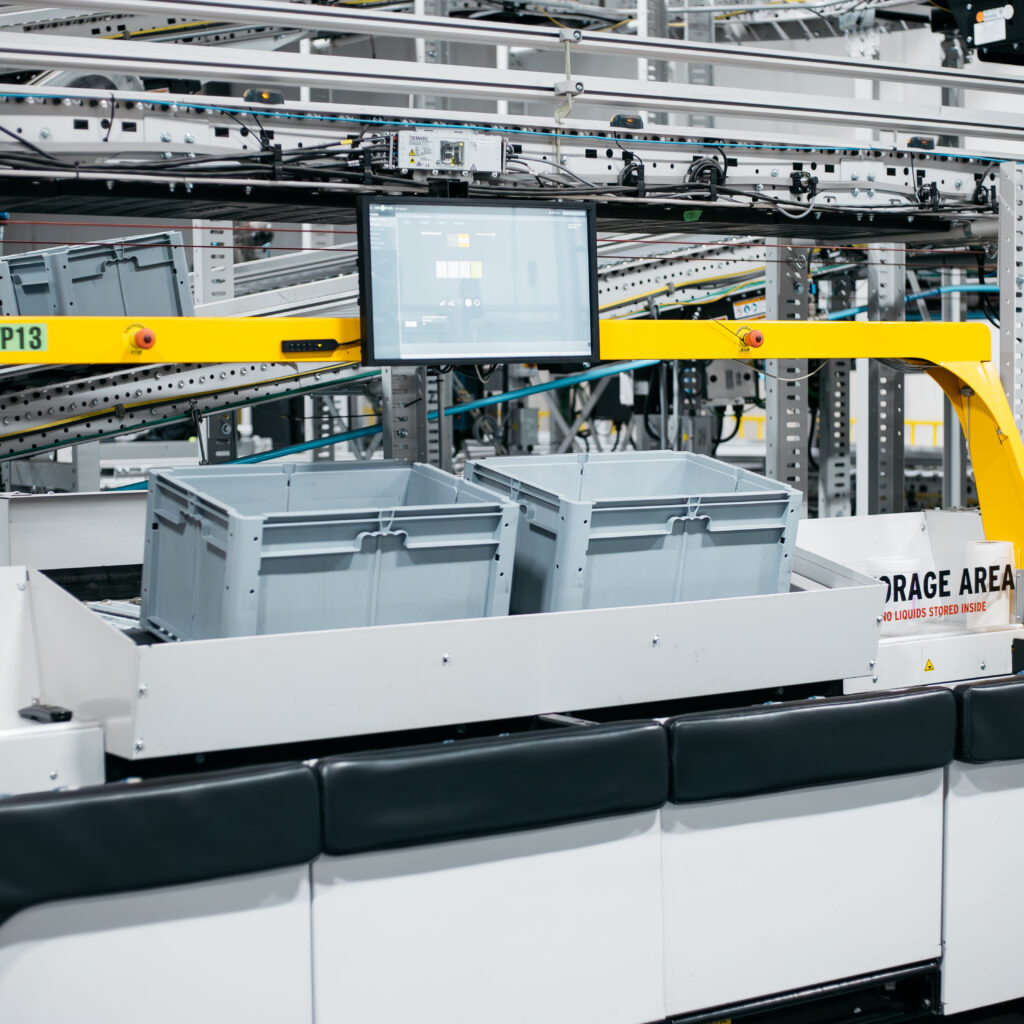
Flexible automation is reshaping warehousing and distribution. AMRs, RaaS platforms, and modular system components have enabled operations to scale throughput quickly, shift workflows on demand, and adapt to unpredictable order patterns.
But even as automation accelerates, one truth remains constant: a system is only as strong as its components. One of the most overlooked components is the industrial crate.
At RollerPlast, we see containers as critical infrastructure within the automation ecosystem. As warehouses move toward flexible, highly adaptable automation, the demands on containers increase. Totes must be equally flexible, precise, and automation-ready.
As automation continues to grow and improve, demand placed on industrial crates will only increase. Faster AMRs, AI-optimised routing, and mixed-workflow fulfilment environments will require containers engineered for accuracy and consistency.
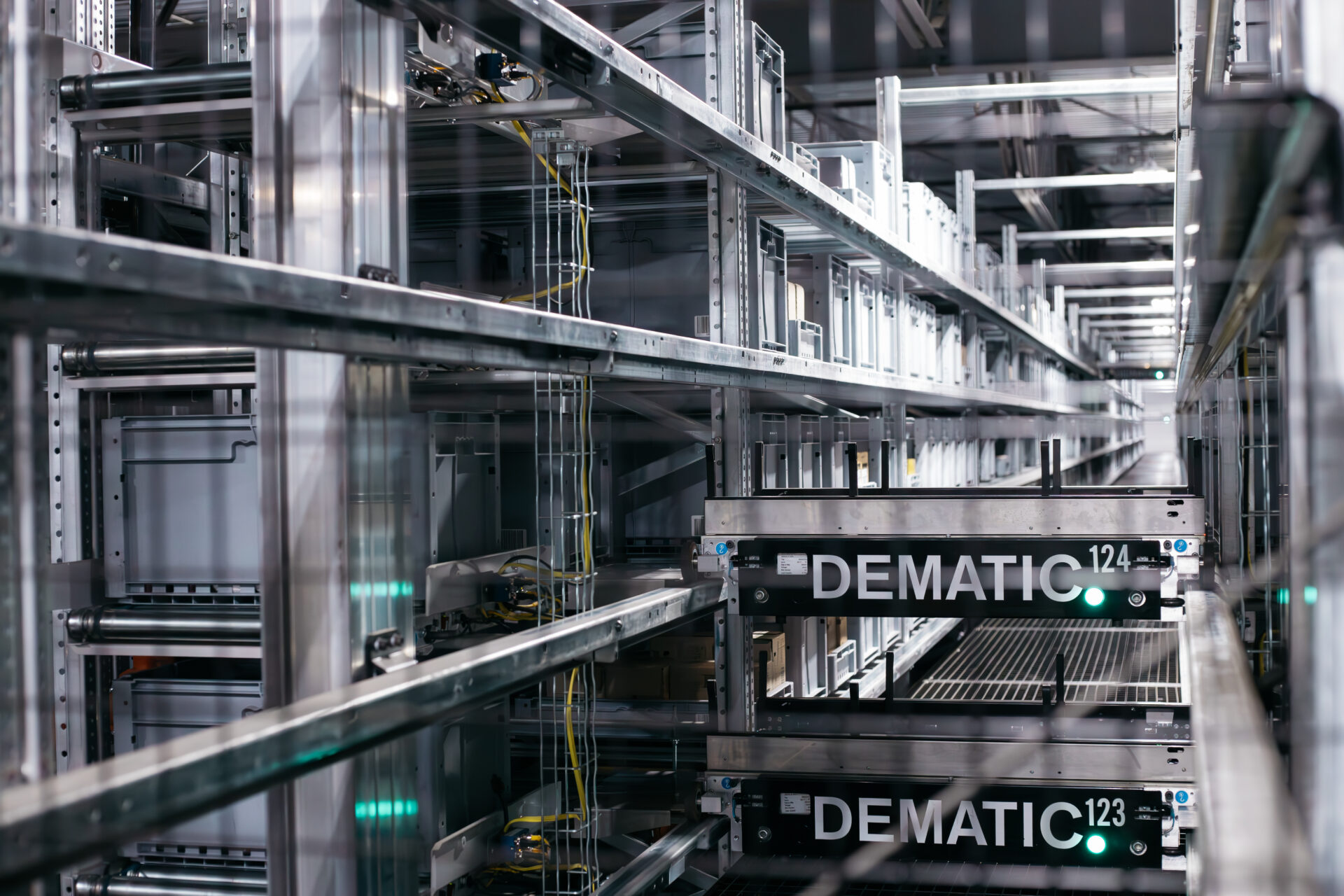
HOW INDUSTRIAL CRATES AFFECT FLEXIBLE AUTOMATION SYSTEMS
In flexible automation, small inefficiencies compound quickly. A deformed tote wall or inconsistent footprint doesn’t just slow down a conveyor; it disrupts the entire system’s flow.
Common container-related failures include:
- Inconsistent footprints that cause poor alignment
- Cracked corners and walls from repetitive impacts
- Deformed walls that interfere with robotic grippers
- Tracking failures due to unreadable or poorly placed labels
These issues trigger stoppages, force human intervention, and reduce the ROI that automation is designed to deliver.
Warehouses lose hours of throughput each week because outdated totes weren’t designed for automated handling. Once automation-ready totes are introduced, those interruptions disappear almost instantly. This means the investment in automation-compatible totes is easily recouped in the cost savings of having totes and trays that actually work with your system. This is why RollerPlast positions automation compliance as a design requirement.
WHAT TO LOOK FOR IN AN INDUSTRIAL CRATE FOR WAREHOUSE AUTOMATION
Not every container is built for an automated world. For flexible systems to function as intended, totes must meet strict performance standards. Automation-ready crates should include:
- Precision footprints compatible with leading AMR, AS/RS, and conveyor platforms
- Reinforced stacking geometry for high-density, high-cycle environments
- Custom inserts and dividers to support SKU variety and protect fragile items
- RFID and barcode-ready surfaces for flawless tracking across workflows
- High-durability materials engineered to withstand repetitive handling for a long life-cycle
RollerPlast intentionally designs these features into our industrial crates. We work directly with integrators, system designers, and operations teams to ensure every crate performs exactly as the automation system–and client operation–demands.
HOW CONTAINERS SHAPE DYNAMIC WAREHOUSE LAYOUTS
When planning your warehouse or distribution center layout, it is crucial to factor in your crates. In flexible automation systems, containers can impact:
- Travel paths and AMR flow
- Pick presentation and ergonomic access
- Vertical storage density in racking and AS/RS systems
- Robot handoff precision at conveyors, lifts, and buffer points
A tote that’s 3 mm out of tolerance can create friction across dozens of touchpoints. As systems grow more dynamic, containers must become more exact, and it will be even more important to factor crates into warehouse design. RollerPlast supports planners early in the design process so containers contribute to automation and flexibility.
STRATEGIZING FOR A HOLISTIC WAREHOUSE ECOSYSTEM
Automation delivers the highest value when every element of the operation works in sync: robots, software, workflows, layout design, and containers. RollerPlast’s engineering approach is built around this ecosystem mindset:
- Support closed-loop, reusable container systems that reduce long-term waste and reduce replacement costs
- Durable, automation-ready totes to reduce unplanned downtime, stabilize operational costs, and extend the lifespan of automation hardware
This is why RollerPlast is more than a manufacturer. We are a technical partner helping warehouses align infrastructure with the realities of modern logistics.
CONCLUSION
Flexible automation has changed what warehouses and distribution centers require from their infrastructure, and containers are a crucial–yet often overlooked–part of this evolution.
RollerPlast’s automation-compliant, customizable industrial tote design allows operations to accelerate, adapt, and scale. To future-proof your automation investment, you must future-proof the containers that run through it.
FAQs
Why do containers matter so much in flexible automation systems?
Containers interact with every part of an automated workflow — conveyors, AMRs, lifts, and storage systems. If a tote is even slightly out of tolerance, it can cause jams, misalignment, or robot errors. In flexible automation environments, where throughput depends on smooth handoffs, container performance becomes a core part of system reliability.
What’s the difference between a standard tote and an automation-compatible tote?
Standard totes are designed for general handling; automation-compatible totes are engineered for precision and repeatability. They maintain consistent footprints, resist deformation under heavy cycles, and integrate with scanning and tracking technologies. Automation-ready totes are built to support high-density, high-frequency workflows without becoming a bottleneck.
How do containers influence warehouse layout and workflow design?
Tote geometry affects more than storage space. It impacts travel paths for AMRs, how items are presented at pick stations, vertical racking configurations, and how efficiently robots can grip and hand off containers. In flexible automation systems, container dimensions—and their precision—directly shape how smoothly the warehouse operates.
What are the long-term cost benefits of using automation-compliant reusable totes?
Although they require a higher upfront investment, automation-ready totes reduce long-term costs by minimizing downtime, replacement cycles, and manual rework. Their durability prevents the cracking, warping, and tracking failures common with lower-grade bins, which in turn protects the ROI of automation systems.
How does RollerPlast develop totes that align with current and future automation needs?
RollerPlast works directly with automation integrators, system designers, and operations teams to understand engineering tolerances and real-world handling stresses. This collaboration informs each design—from footprint precision to reinforcement patterns—ensuring each tote supports today’s flexible systems and remains compatible as automation technology evolves.