For years, warehouse innovation was defined by physical automation: conveyors, robotics, and automated storage systems. Today, the conversation is expanding, and robotics and automation are taking a back seat to AI as the most influential technology to the future of supply chains.
The adoption of AI technology is meant to improve, if not eradicate, supply chain inefficiencies and reduce volatility. But a system is only as good as the sum of its parts. In other words, you can invest significant money into AI, automation, robotics, and other technologies, but if physical components of your warehouse aren’t designed to integrate with these new technologies, you won’t see the desired return on investment. And yes, that means your crates.
HOW ARE WAREHOUSES USING AI TO IMPROVE OPERATIONS?
Leaders in the industry are using AI technology to assess operations and use the insights to make improvements. With the analytics provided by AI, warehousing and distribution companies can improve everything from inventory management to demand planning to logistics.
Beyond logistics, companies like Amazon are utilizing robots to lighten the load for their workers. The latest iteration of these robots utilizes AI to allow workers to communicate with the robot as if it were any other coworker. This allows for smoother operations and reduces the training required for employees to work with these robots.
Unlike traditional software that simply reports on warehouse activity, Agentic AI is designed to evaluate conditions, identify opportunities for improvement, and make recommendations or decisions in real time. The goal is not just visibility, but continuous optimization.
SMART SYSTEMS STILL DEPEND ON PHYSICAL HARDWARE.
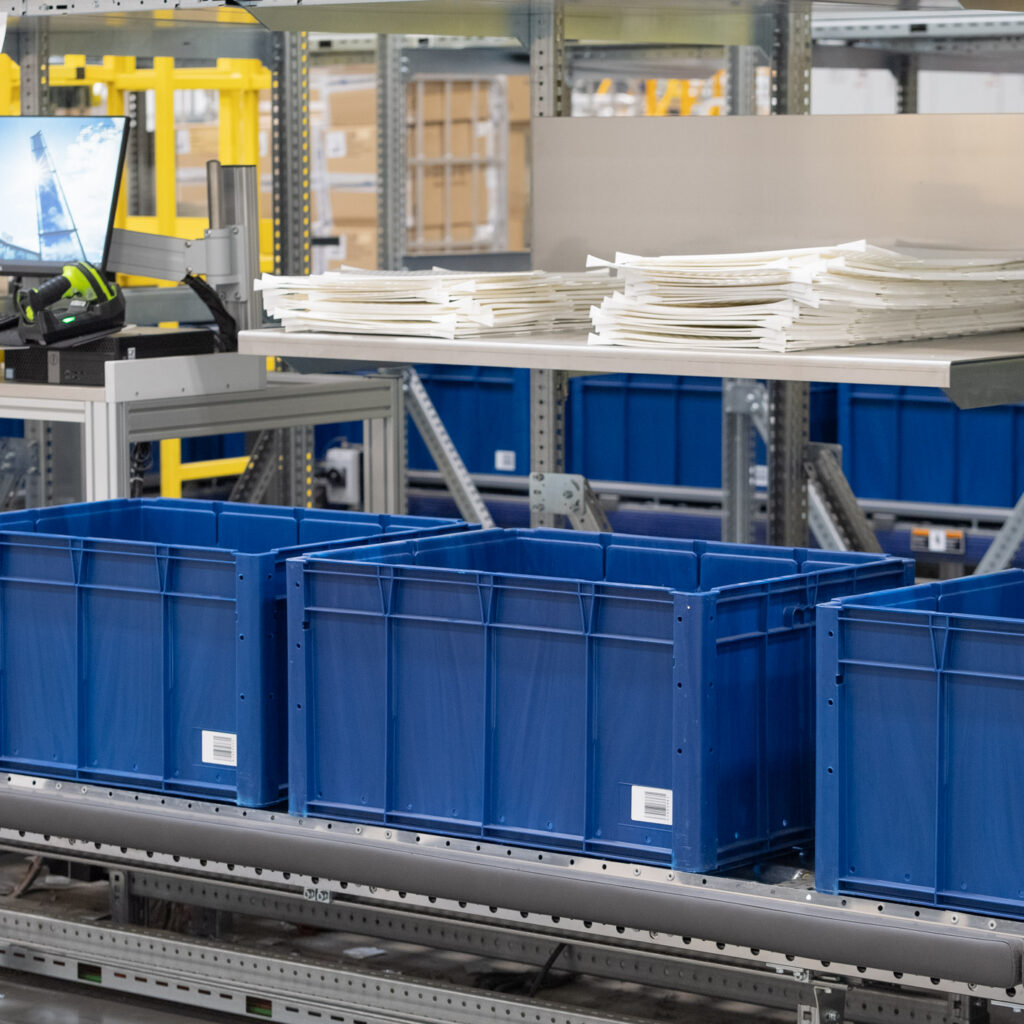
There is only so much AI can do without also upgrading the physical hardware in your warehouse and distribution centre. Beyond the durability issues of corrugated boxes, they are not optimized for automation or AI. Investing in containers that have consistent dimensions, reliable stacking performance, predictable handling, and RFID capabilities optimizes the results technology can give to your operation. Here’s how quality containers can help:
- Consistent dimensions improve automated handling
- Reliable stacking improves storage density
- RFID enables real-time inventory visibility
- Durable containers reduce replacement cycles and operational interruptions
WHY THE RIGHT CONTAINER MATTERS NOW MORE THAN EVER
In today’s warehouse environment, containers are no longer just storage and a means of transporting goods. Now, containers are used as a means of tracking inventory and integrating with automation and AI to improve efficiency and lessen costs. The right containers can:
- Save space, which means saving money.
- Lighten the workload on employees, improving time efficiency, worker productivity, and even addressing employee shortages.
- Better protect your product, minimizing lost inventory and profits from damaged goods.
- Picked up, moved, stacked, tracked, and identified by AI and automation technology.
Warehouses that don’t invest in keeping up risk being left behind.
AI CAN ONLY MAKE UP FOR POOR INFRASTRUCTURE SO MUCH
At RollerPlast, we’re watching these changes closely. As warehouses adopt more advanced automation and AI technologies, we believe container design will play an increasingly important role in operational performance. The more intelligent warehouse systems become, the more important consistency, durability, and compatibility become at the container level.
Agentic AI may have the ability to transform how warehouses make decisions and optimize operations, but success will still depend on execution. The facilities that benefit most from the next wave of automation won’t simply invest in smarter software; they’ll invest in the physical systems that support it. When AI is working to eliminate inefficiencies, the last thing your operation needs is a container creating new ones.