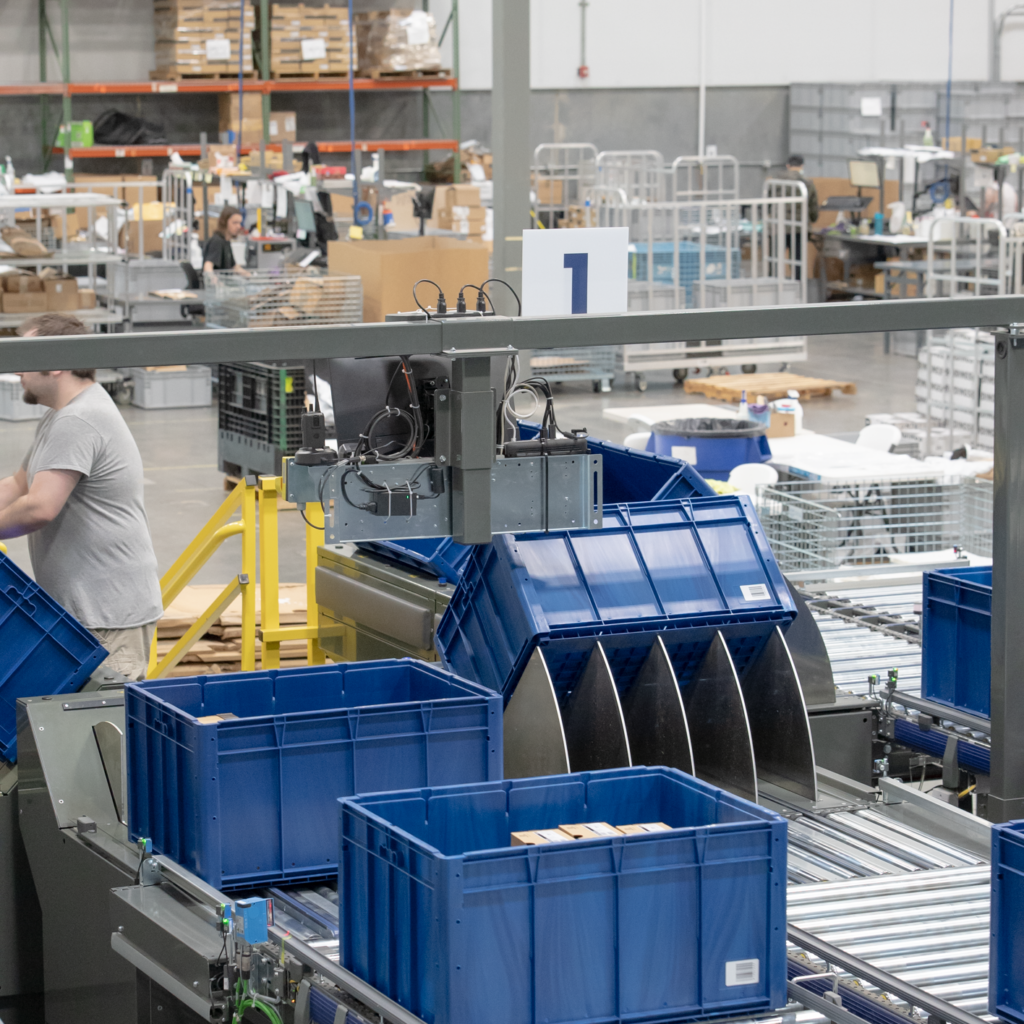
Supply chain issues, increased customer demands, and labour shortages are moving the warehousing and distribution industry to automation as companies look for ways to overcome these challenges. The future is here, but it’s expensive, and it can be difficult for smaller operations to compete with larger ones. Not with RaaS.
Robots as a Service, or RaaS, allows warehouses to lease AMRs (autonomous mobile robots) with a cloud-based subscription instead of purchasing robots outright. This is an out-of-the-box idea we can get behind!
By converting the AMRs from a capital expense to a monthly operational expense, budget approval with shareholders becomes simpler, and the ROI is shortened from years to months. Not only that, but RaaS systems allow operations to adjust their cost in correlation to their needs: during high-volume seasons, lease more AMRs; during low-volume seasons, lease fewer.
Access to automation is rapidly expanding. As more and more warehouses and distribution centers move to automated systems, it’s important to consider more than just the robots. Layout, processes, and yes, even your containers, need to be factored into your new automated operations.
BEFORE YOU AUTOMATE
While automation will simplify your operations and improve efficiency, the process of automating your warehouse or distribution centre is a little more complex than just subscribing to a RaaS system and turning the robots on. Here is what we recommend as a starting point for how you can best prepare to automate:
- Conduct an assessment of your current process and pain points, then use this information to identify clear goals you hope to achieve by automating.
- Evaluate your technical infrastructure, including your warehouse management system (WMS), network capacity and data standardization practices to see if these require updates or optimization before implementing an RaaS system.
- Review your warehouse layout and look for opportunities for optimization, so it can best support your automation goals. Identify your high-traffic areas, clear pathways for automated vehicles, and create a plan that positions high-demand items closer to packing stations.
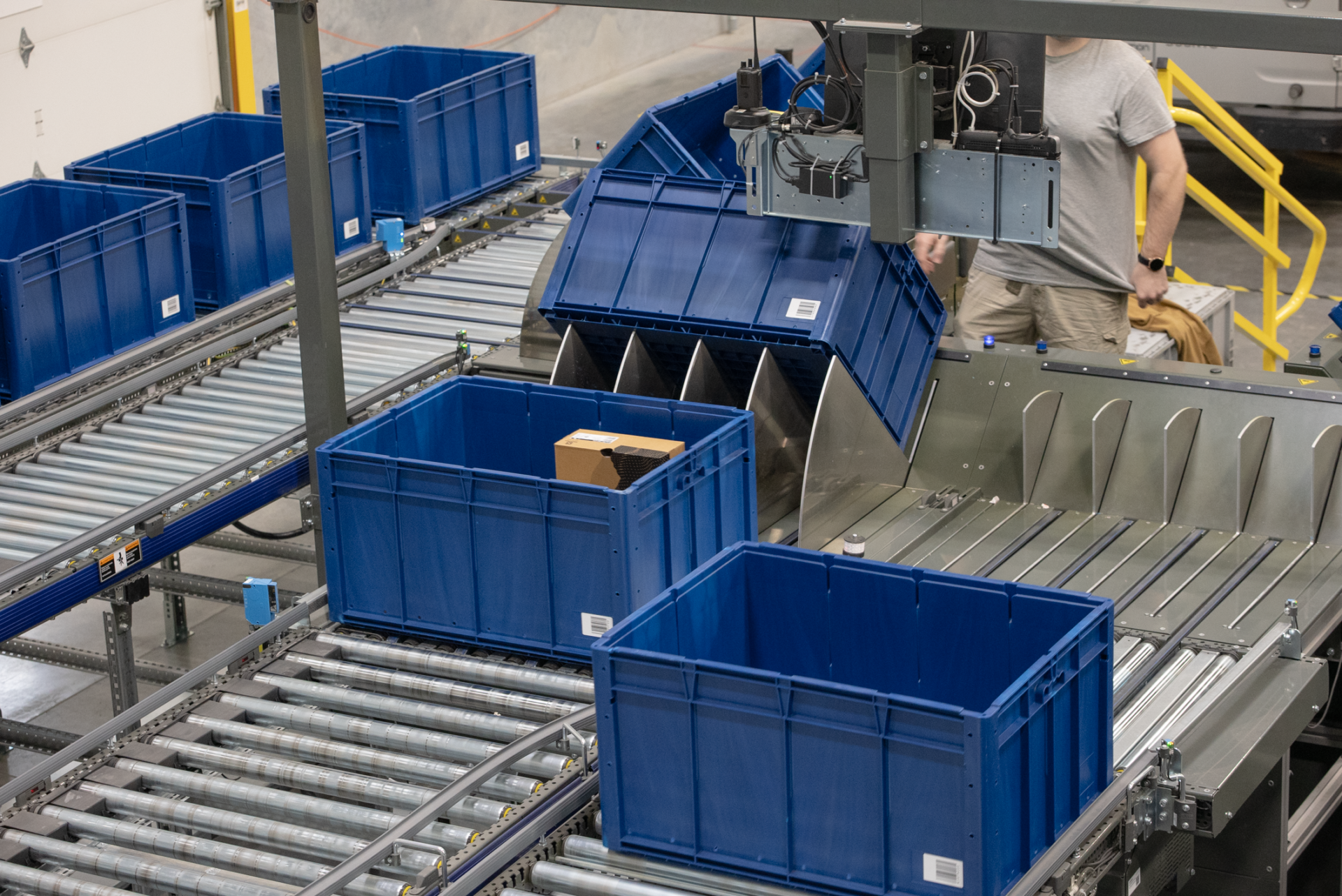
An important thing to remember is your industrial crates. (You knew this was coming.) You’ll want to evaluate whether your current totes and trays are stack-stable, sensor-readable, and compatible with conveyor widths and robotic grips. Containers that are not designed for automation can create bottlenecks in your system. Automation-compatible crates need to be part of your plans. RollerPlast partners with clients to assess whether your operations would be suited for our industry-standard totes, or a custom option, ensuring your totes match the technical specs of AMRs, conveyors, and lifts before rollout.
AUTOMATION IMPLEMENTATION STRATEGIES
Now that you have assessed your needs and established your automation goals, you will need to select an RaaS supplier that is the best fit for you. We recommend choosing an automation system that can scale with your business. It should be flexible enough that it can adjust to volume, layouts, and other business needs. Here are a few things to add to your implementation checklist:
- Ensure your RaaS system is compatible with your warehouse management system (WMS) to maintain data consistency and provide real-time data.
- Support your people by communicating with your employees the benefits of upgrading to an automated system and how this will improve their working conditions as the AMR’s and other automated systems take over the heavy lifting, many of the monotonous tasks, reduce repetitive motions (which can lead to injury in humans), and create opportunities for your employees to upskill and move into new positions
- Ensure you order your totes, trays, and any other components necessary for your new system to operate efficiently
Transitioning to an RaaS system is often a major overhaul with many factors to consider. By creating a clear and concise plan and effectively communicating with your team and vendors, you can ensure a smoother transition and minimize downtime.
ONGOING OPTIMIZATION
As advanced as RaaS systems are becoming, they are still not self-managing or self-maintaining. By performing regular maintenance and data analysis, you can continuously optimize your systems and, with that, your bottom line.
- Use data analytics to monitor performance, identify trends, and make informed decisions about how to refine your automation. A benefit to RaaS is that you can lease precisely the number of robots you require, so by staying on top of your data, you can increase or decrease your robots (and thus your expenses) based on your volume of work.
- Similarly, Rollerplast allows our clients to order totes as needed and has no minimum order quantity. This means you can start with a smaller number of totes or trays and order more as needed.
- Perform regular, preventative maintenance on your equipment to keep it in optimal condition and minimize downtime.
- Routinely check the conditions of your totes and trays. Minor damage to a tote’s (or tray’s) base or alignment can cause repeated micro-delays over time. Standard cardboard boxes require regular replacement and upkeep; it’s important to stay ontop of this in order to minimize bottlenecks, delays, and downtime. Rollerplast totes are durably designed to withstand the rough conditions of warehouses and distribution centres and stay in rotation for years, but do, over time, require upkeep.
WHERE RaaS FALLS SHORT
RaaS systems offer an affordable option for businesses of any size to make a relatively swift transition to automated systems by creating standardized systems that can adjust to your operations’ needs. However, these systems are limited in their customization and may not be optimal for your products or unique workflow.
One such challenge can be tote and tray compatibility. When switching to a RaaS system, it is important to consider your current storage solutions and discuss optimization options with a trusted vendor. RollerPlast offers durable, automation-compatible totes and trays in both industry-standard and custom sizing. We cannot stress enough how totes and trays can impact the functionality of your RaaS system and how important it is to ensure yours are optimized for automation. It would be unfortunate to invest in a RaaS system and have it fall short of your hopes and expectations simply because your totes and trays are a limiting factor.
THE BOTTOM LINE: AUTOMATION IS ONLY AS GOOD AS ITS WEAKEST LINK
RaaS and AMR systems can transform operations, but only when every aspect of the workflow is designed for precision, including the totes and trays. Understanding the importance of automation-compatible totes and trays, RollerPlast’s are designed are:
- Industry-standard or custom-sized, depending on your operational needs,
- Built for AMR, conveyor, or AS/RS use,
- Optionally made using recyclable materials for closed-loop sustainability,
- Locally manufactured for faster turnaround and consistent quality,
- Ordered in custom quantities, with no minimum.
Automation is changing the game of warehousing and distribution, and RaaS systems are levelling the playing field by making it possible for businesses of any size to transition to automated systems. Offering solutions for labor shortages, supply chain concerns, and consumer demands, it’s no wonder RaaS demands are rapidly growing. When making the switch, it’s crucial to consider every aspect of your system and processes, and make upgrades where necessary. And yes, that includes your totes and trays.